
B2B (business-to-business) buyer behaviour has changed drastically over the last few years.
The customer journey used to be pretty straightforward: visiting a website, reading about products or services, and after multiple visits (plus checking out competitors’ sites), eventually reaching out for a demo or sales call.
Now it’s not that simple. B2B customers expect a much higher level of digital engagement at every stage. In fact, 80% of B2B sales operations happen through digital channels. From video demos and personalized emails to self-managed accounts, robust online resources, and dedicated social media support channels – a company website is no longer enough.
We’ll explore why B2B companies need to use both websites and social media, and dive into eight effective ways to maximize the relationship between your social profiles and your site.
Why Have B2Bs Avoided Social Media Marketing?
For decades, B2B companies have focused digital efforts (and budgets) on running a website as a central hub for brand awareness and lead gen. They may have run digital ads and email campaigns, but social media is usually either not used, or is an afterthought.
This is because the majority of B2Bs have difficulty in building and maintaining a social presence. Compared to B2C brands, the average B2B offering just doesn’t lend well to social channels that have historically relied on gorgeous, heavily produced visuals. B2C shopping is also driven by influencers, which are few and far between for many B2B niches. Plus, people aren’t exactly going to make an expensive SaaS or service purchase based on one person’s online recommendation!
But right now social media is all about authentic storytelling and video – and it doesn’t take a huge budget and professional equipment to create engaging posts. This is a great time for B2Bs to expand their digital ecosystem to include more social content.
How Does Social Media Support a B2B Website?
Websites and social media profiles play complementary roles in the B2B buyer journey. The infographic below highlights the key differences between the two channels and why businesses benefit from leveraging both:
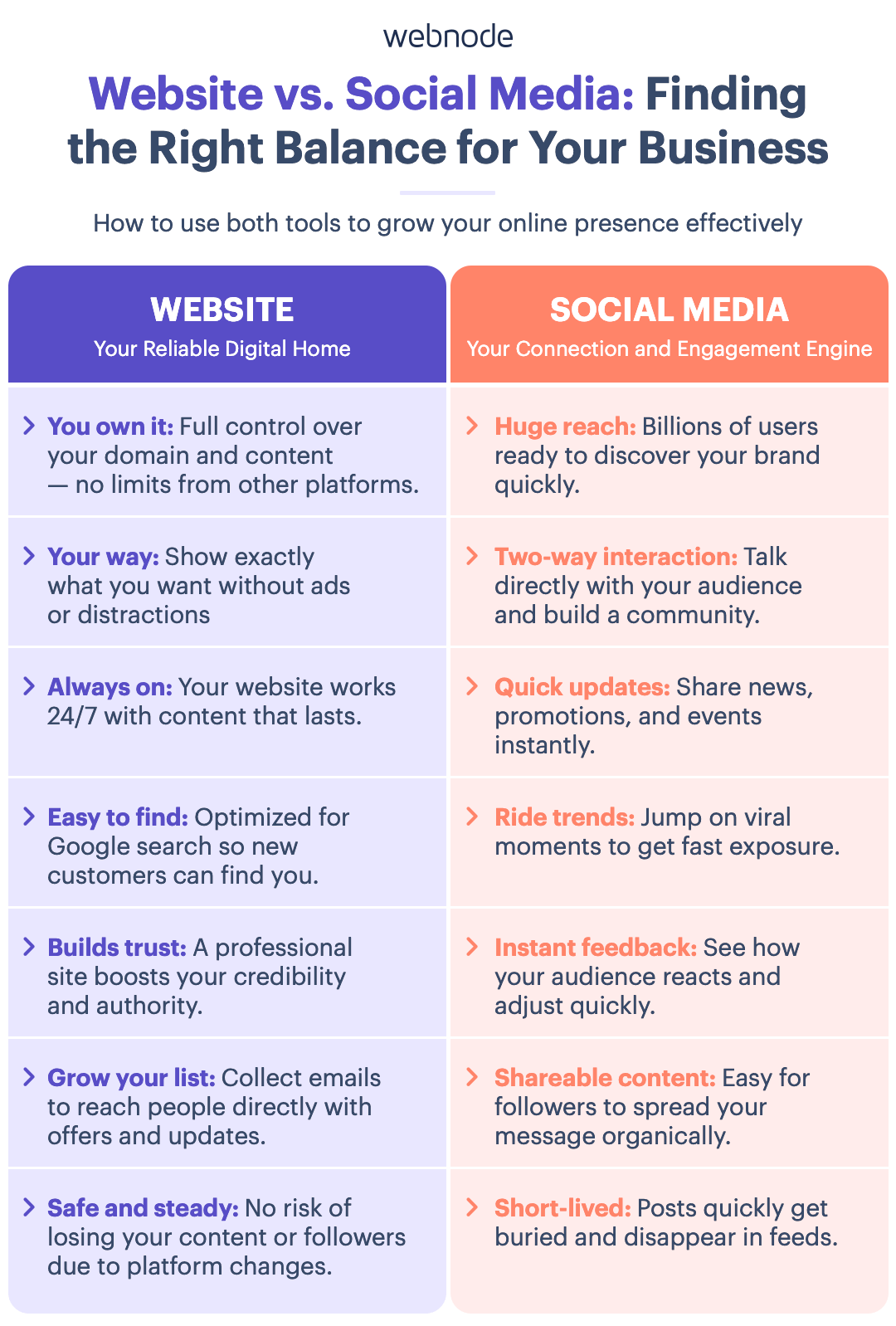
When 89% of B2B buyers research products and services online during the consideration stage, having both a website and social channels helps to create a fuller online presence. Why? You get more ways to showcase your business and engage with customers in a way they prefer.
Combining a B2B website with social media profiles can also help you build brand visibility, credibility, and trust with decision-makers before they ever contact you to get a demo or talk about pricing.
And finally, 68% of B2B buyers do research through multiple digital touchpoints without even involving a salesperson. When your B2B product pops up in different channels, not only does your company remain front-of-mind, but you’ve also got the potential for the researcher to see positive comments and reviews. As a result, it affects B2B decision-making.
8 Effective Ways to Harmonize B2B Website and Social Media Strategies
1. Build a Consistent Brand Image
The combined use of social media and a company website enables businesses to supplement promotional content with detailed product information and deeper insights into their brand values, while ensuring consistency in brand voice, messaging, and visual identity.
Taking into account that an average B2B buyer uses 10 channels during the research phase, it’s important to make sure that your brand has a similar look and personality no matter where they find you.
You can accomplish this by ensuring that your content has the same aesthetic, messaging, and values on every digital asset. This way, potential customers can quickly recognize and remember your brand across digital touchpoints.
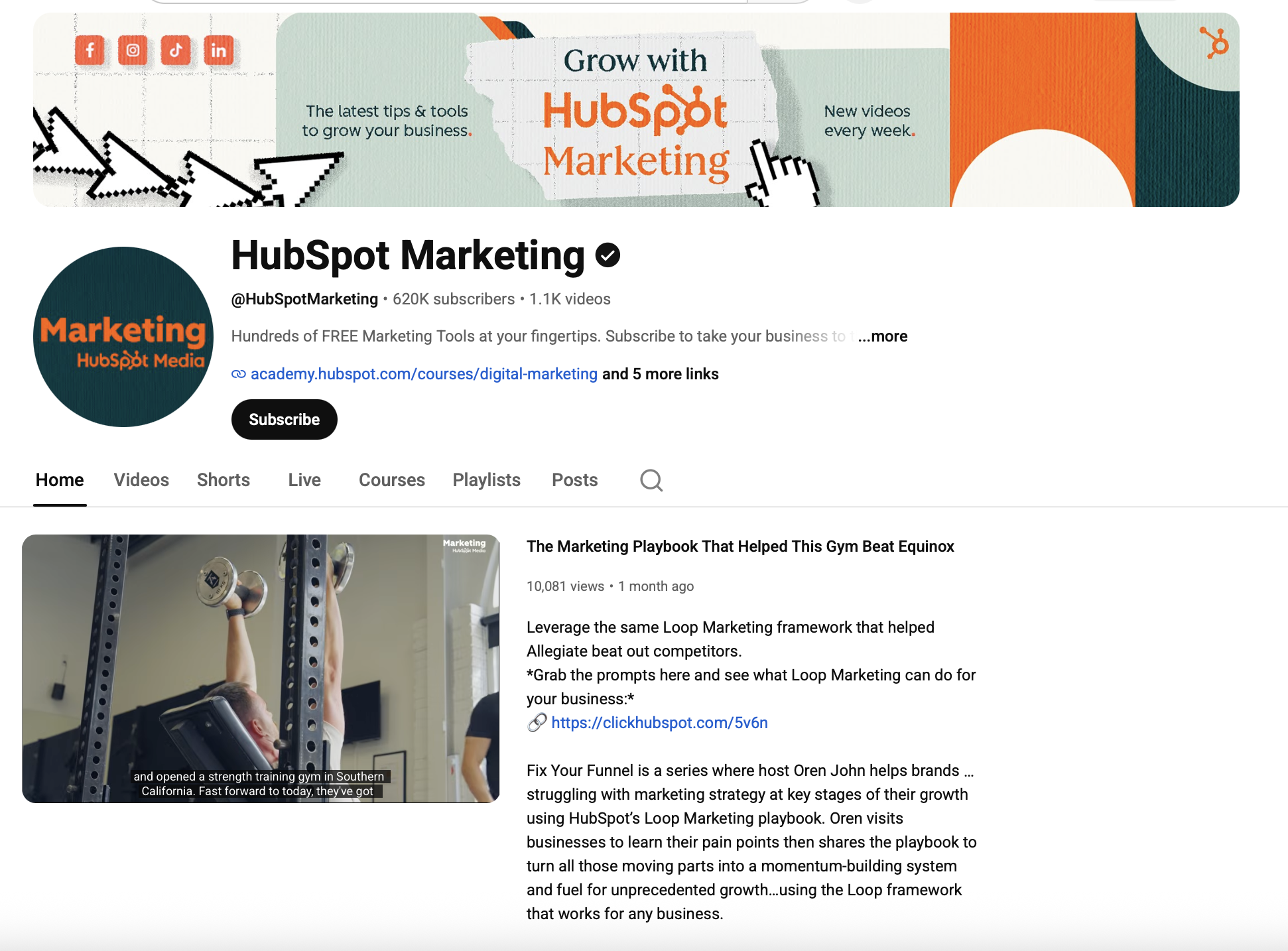
Hubspot is a great example of this strategy as the company uses the same brand colors for its website design and social media images (like the YouTube channel shown below), which creates strong brand recognition.
2. Align with the B2B Buyer Journey
The B2B buyer journey is complex and challenging – it takes an average of 10.1 months for B2B decision makers to find and approve options. And with upwards of eight team members per company involved in the process, it’s important to make sure that you provide tailored information about your value proposition.
Website and social media content should complement each other rather than duplicate the same information. Social media is great for driving awareness, while the website provides more in-depth information to support decision-making.
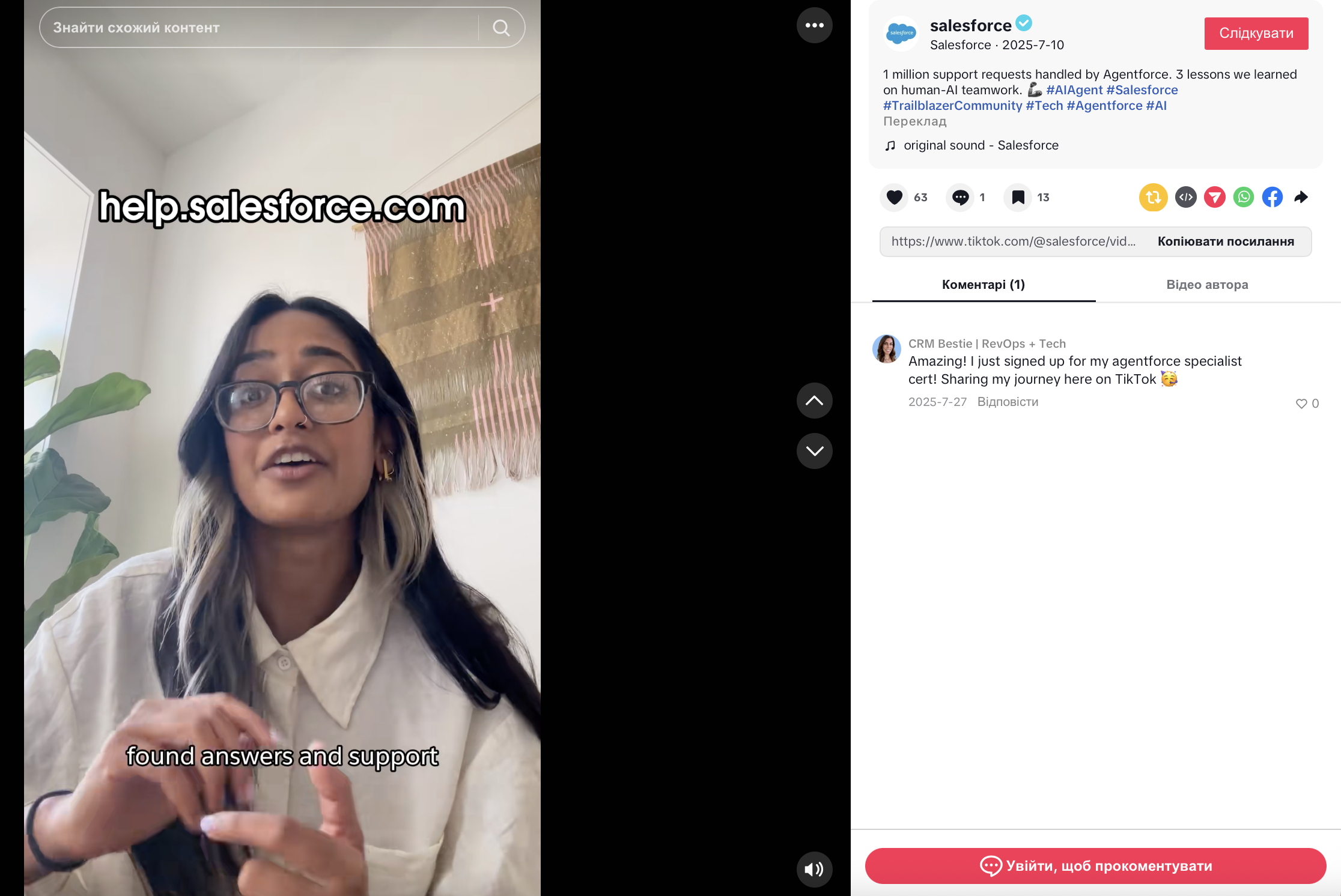
For example, Salesforce uses TikTok to share short, engaging videos that simplify business concepts and increase brand awareness among potential buyers. These posts capture attention and encourage further exploration, while the company website provides detailed product information, case studies, and resources that help stakeholders evaluate solutions and make informed purchasing decisions.
3. Repurpose Content for Different Platforms
Using exactly the same content across a website and social media is not the most effective strategy for brand promotion. However, businesses do not need to spend hours creating completely new content for each platform.
Instead, you can repurpose existing content by adapting its format, tone, and presentation to suit different digital assets, while maintaining a consistent brand voice and message.
Print-on-demand companies like Printful and Printify illustrate how this works in practice: their audiences live across LinkedIn (operators and established merchants) as well as Instagram, TikTok, and YouTube (aspiring sellers researching their first venture). A single educational asset has to flex across very different formats.
Printify does this with its foundational content: its pillar guide on how to start a print-on-demand business gets adapted into shorter Instagram carousels, TikTok walkthroughs, and YouTube explainers, meeting aspiring sellers on whichever platform they’re researching from.
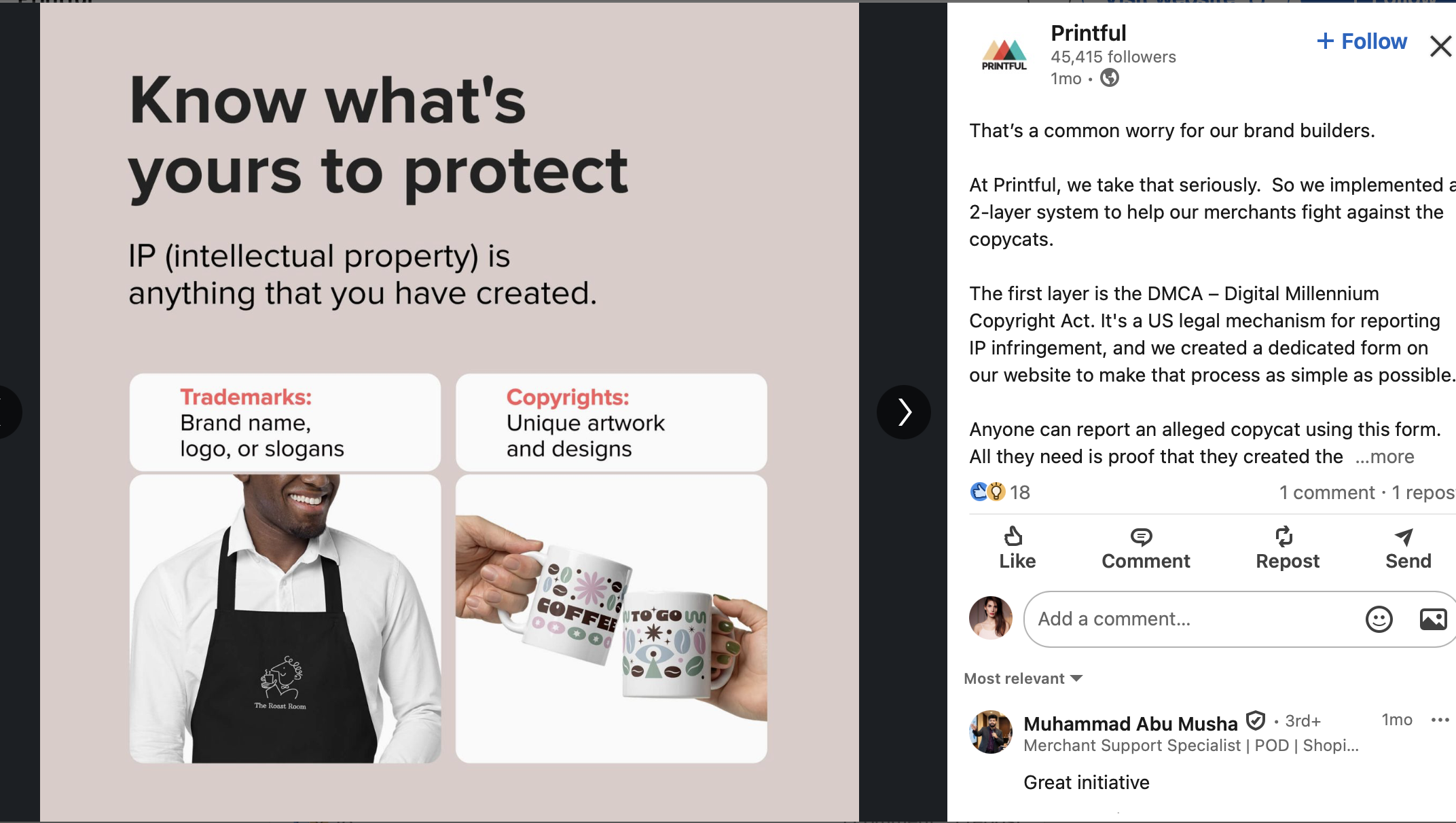
Printful takes the same approach: after publishing an in-depth blog post on the differences between copyrights and trademarks in January 2026, the company repurposed the key takeaways into a concise LinkedIn carousel, making the information more accessible and engaging for its social media audience.
Social media tools make it easier to repurpose content by allowing businesses to adapt existing materials into different formats for various platforms. For example, a blog post published on a website can be transformed into a series of social media posts, infographics, short videos, or stories that retain your voice and visual identity. Scheduling and content management tools further help businesses distribute repurposed content efficiently.
4. Drive More Traffic from Social Media
B2B buyers are also everyday humans who spend time scrolling social media apps, and that behaviour extends to how they do research during office hours.
Thus, another effective way to make your B2B website and social media profiles work together is to funnel the interest generated by social media content into website traffic. Not only does it help to support your SEO efforts, but it also guides them towards more in-depth information on your offering.
There’s no need to have a social media presence on all platforms; it’s important to choose the best social media platforms for your company that are likely to drive the results you want. Lately, Instagram is gaining traction as a platform for B2B marketing and it has in-built features to help your website get more traffic.
The Instagram bio gives business profiles an opportunity to add three clickable links, which you can utilize to help users get to the content they most likely want to see. Forge and Smith provides links to see proof of successful work and educational content, as well as the main website URL.

5. Provide an Omnichannel Customer Support
People reach out to brands with their questions, issues, and concerns, on the platforms they use most actively. If B2B buyers encounter an issue while browsing a website, they are likely to use a live chat, contact form, or knowledge base. On the other hand, decision-makers who discover a product or service through social media will likely prefer to send a direct message or comment on a post to learn more.
Omnichannel customer support is expected. B2Bs need to also ensure that customer support is consistent across all touchpoints, and that customers can seamlessly move between channels without disrupting their experience.
As companies expand their digital presence, managing customer inquiries across websites, social media, email, and live chat can become increasingly challenging. In such cases, outsourcing customer support can help maintain fast response times and a consistent customer experience.
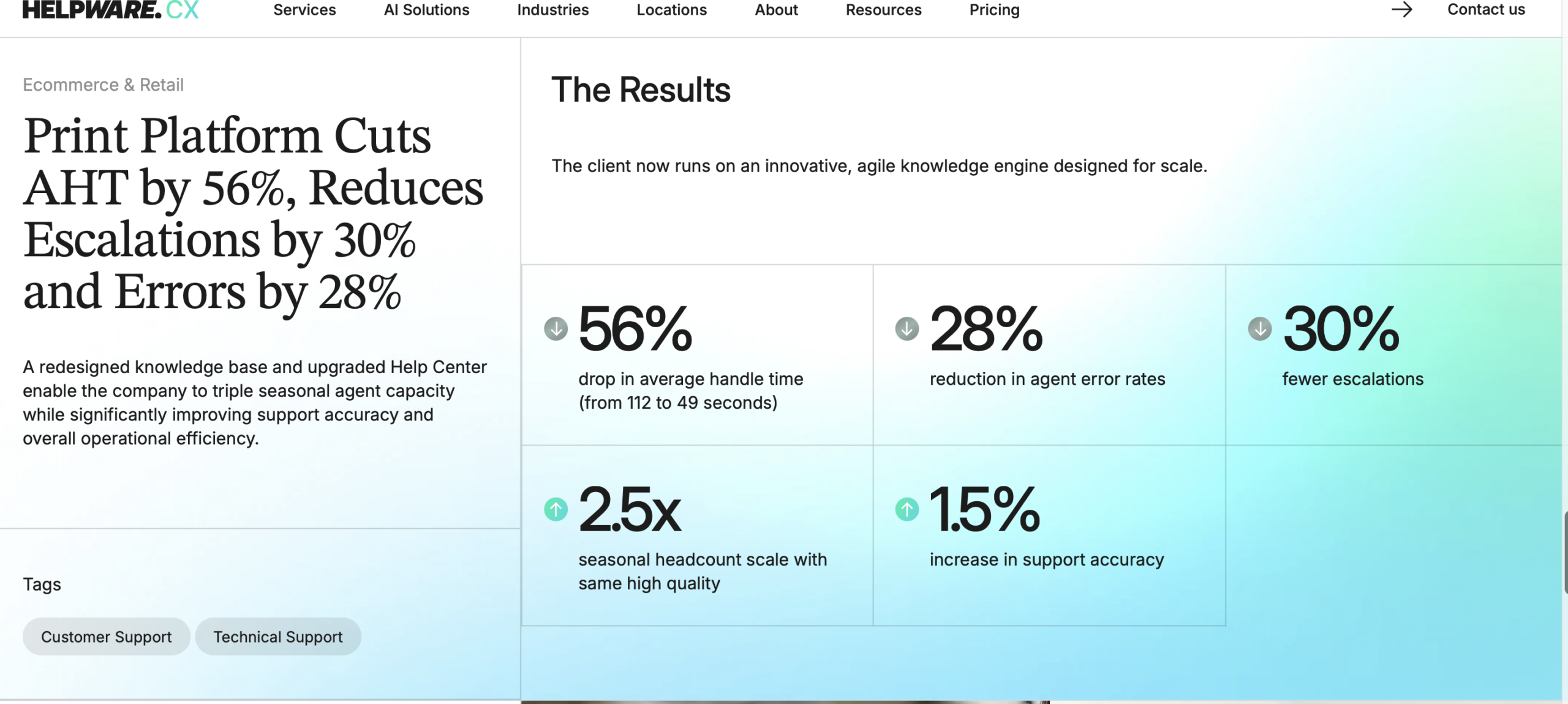
For example, when one global print-on-demand platform decided to outsource customer support, technical support, and merchant (B2B) support, it turned to Helpware that could quickly help to improve the company’s knowledge base and self-service resources. As a result, Helpware reduced call handling time by 56%, lowered escalations by 30%, and cut error rates by 28%, while scaling support during peak periods.
6. Collect and Utilize Social Proof
Social proof plays a crucial role in affecting B2B purchase decisions. In fact, 73% of B2B buyers trust peer recommendations, so they pay closer attention to what other customers say than to a vendor’s claims.
Your B2B website and social media profiles serve different purposes. While a company website can deliver more detailed evidence through case studies and in-depth client success stories, social media makes it easier to collect authentic, tagged use case photos and positive quotes from customer comments.
Once you’ve gathered social proof from existing customers (and have permission to use it), you can repurpose it on all of your digital assets. For example, Keap has created a separate playlist for all customer stories on its YouTube channel.
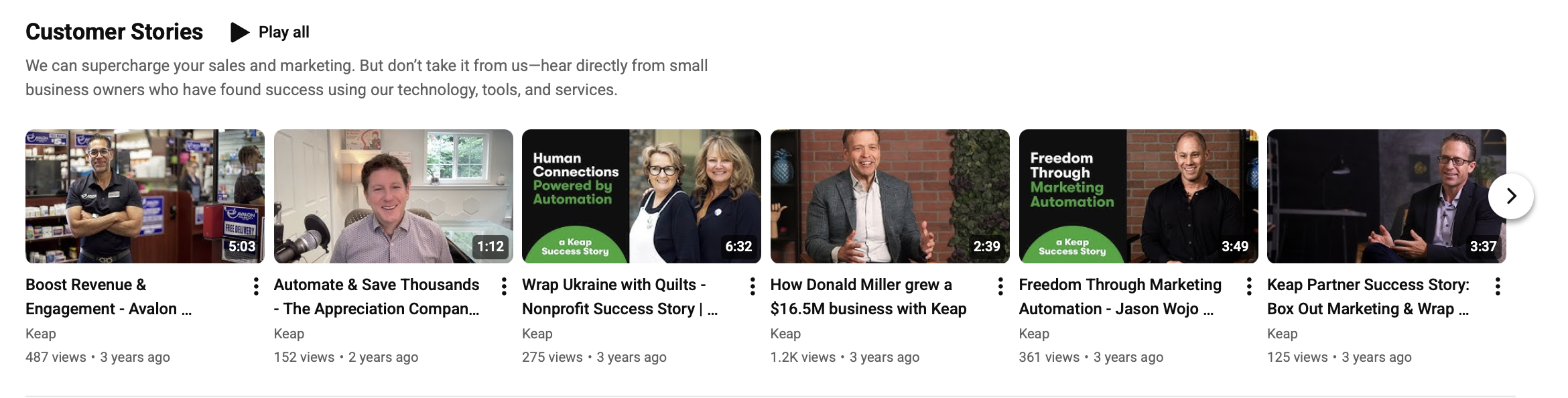
Collecting and displaying social proof across multiple channels reinforces trust, reduces perceived risk, and supports buyers throughout the decision-making process.
7. Leverage Data Analytics for Business Strategy
Using both your website and social media profiles gives businesses access to even more valuable data. Every business should use platform-based and third-party analytics to analyze how prospects interact with website content, social posts, and advertising campaigns. This provides deeper insights into buyer behaviour and preferences.
Instead of evaluating these channels separately – or having them managed by separate teams – companies should combine website and social media analytics whenever reporting is done, to gain a more complete view of their audience. This approach is a part of performance marketing and it helps to identify high-performing content, optimize marketing campaigns, and uncover opportunities to improve customer engagement and lead generation.
By leveraging data from both channels, B2B companies can make more informed business decisions, personalize their marketing efforts, and create experiences that better align with buyer needs throughout the decision-making process.
8. Strengthen Lead Generation Efforts
As B2B companies expand their lead generation efforts, paid media often becomes an important channel for reaching decision-makers at scale. Social media platforms offer many lower-cost ad options that can even tie directly to posts you’re already doing.
Understanding the differences between advertising technologies can help marketers choose the right platform for their campaigns. For example, reviewing an Ad Server vs DSP comparison can help teams determine which solution best supports their targeting, reporting, and campaign management goals.
Another way to strengthen lead generation efforts is to run social media ad campaigns that aim at reaching previous contacts. When focusing on re-engagement, it’s better to include exclusive offers that help convince them to complete a lead generation form.
When My Way wanted to capture more leads, they ran a Meta lead generation ad campaign and it generated 2x more leads and 4x more landing page views from audiences exposed to ads versus those not exposed to ads.

While generating more leads is important, maintaining lead quality is still critical. Once you’ve gathered leads, use an email verification tool such as SignalHire to validate collected email addresses, improve data accuracy, reduce bounce rates, and optimize the performance of your email marketing campaigns.
Conclusion
B2B buyers are becoming more informed and more selective, so they expect companies to use all of their favourite communication channels. They demand consistent messaging, relevant insights, and in-depth information throughout the entire decision-making process.
As a result, businesses must ensure that their website, social media platforms, and other digital touchpoints work together to support awareness, evaluation, and final purchasing decisions – rather than operating in isolation.
Have you been struggling with driving leads from social media and closing sales through your website? Forge and Smith would love to chat with you about it.
Share post:

About the Author
Val Razo
Val Razo is a freelance SMM consultant with over 6 years of social media marketing experience. Currently, Val finds Instagram to be a powerful marketing tool for businesses of all sizes and niches, so she’s also happy to write for top-notch blogs and share her Instagram tips. To read more articles from Val, follow her on Twitter.
Contact Us More by This Author