
The way people find information online has changed a lot. Traditional Google search is still in demand, but more and more users are tapping into AI.
Ask ChatGPT or Claude for something, and you won’t get a list of websites like you get from Google. AI tools scan different resources (primarily scraped from Google and other search engines), pull the key points, and give you a precise answer.
This creates a new reality for anyone creating content. You now have three audiences – real people, search engines, and AI systems. If AI fails to understand and trust your content, it may never be shown at all. It’s a shift from classic SEO to integrating AIO (AI optimization).
You’re not ditching your trusted SEO tactics. You’re just adding the new writing goal to become the cited authority in AI responses. How to achieve it? Read on to learn how to write for AI search.
How AI Search Works
AI doesn’t “read” like a human or a search crawler. People read content from start to finish, and search engines look for keywords. AI uses smart technologies to understand the meaning – vector search and retrieval-augmented generation (RAG).
First, AI turns the user’s query text into so-called vectors. This way, AI understands what a person means, not only the exact words they’ve typed. Ask “how to fix a slow laptop,” and the page about “speeding up a computer” will also show up. This is how AI connects the idea.
RAG is how the AI answers. It retrieves relevant chunks of content from across the web. Then it generates a response using those chunks as source material. This means your content is broken into pieces and evaluated outside the context of your full page.
This means you should create small pieces of answers that AI can pick, combine, and show on its own.

The Playbook: 6 Rules of AI-Friendly Content
How to turn this theory into action? Here are six rules you can try when writing your next article.
Rule 1. Answer first, expand second
You’ve probably noticed how journalists write. To grab attention right away, they often use the BLUF (Bottom Line Up Front) tactic, also known as the inverted pyramid. They deliver all of the key details in the first paragraph and then use the rest of the article to provide the nuance, data, and context.
For example, say you are writing about a SaaS tool. Start with the result: “This invoicing tool can save a freelancer at least two working days a month as it automates invoices and tracks payments.” Then explain how that is achieved.
Why does this work? AI understands the main advantage of the tool immediately, in the first section. If you don’t offer anything valuable up front, AI will likely skip your content.
Rule 2. Structure for machines
AI is not creative and cannot properly understand vague titles. If you name your article “What We Think About X,” AI will have no idea what it is about. But if you use a direct phrase, such as “Our Assessment of X,” the machine will get a clue.
This title makes it clear what the article contains:
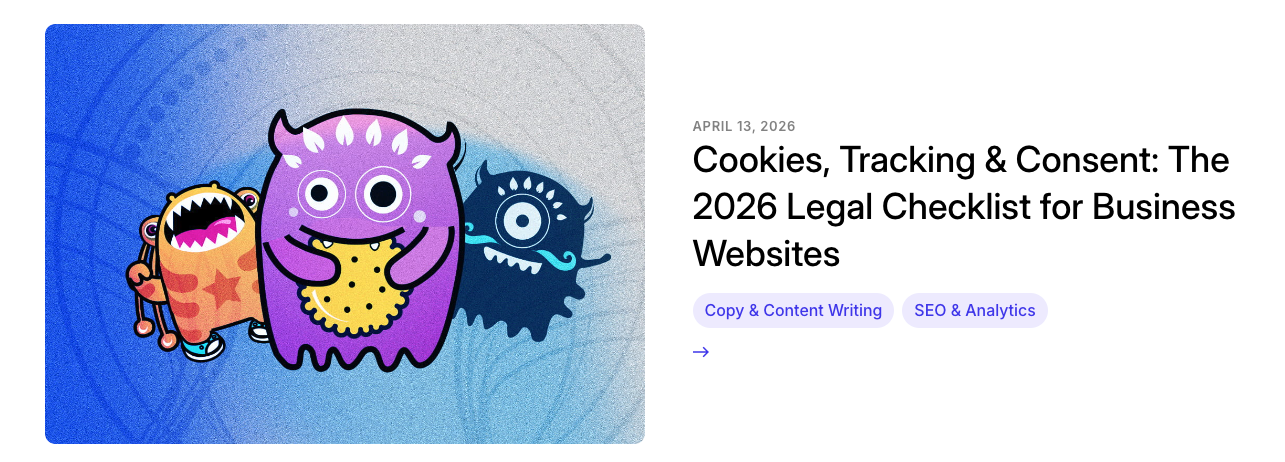
The same applies to the content. AI loves a clear hierarchy. Organize your writing like a simple table of contents. Use headings (H2, H3, H4) and answer questions directly below those headings, to keep your article logical and easy for a machine to scan and memorize.
Rule 3. Write in standalone, modular ideas
AI uses RAG to read your text, so make it like a collection of small chunks, where every section makes sense by itself. Avoid phrases like “as mentioned above” or “we’ll explain later,” because AI will not likely refer to these sections and thus, won’t fully get the point.
You can easily check if you do it correctly – copy one paragraph of your content into a new document. Now read it to see if it explains the idea on its own. This approach makes your content more useful for both readers and AI tools.
Rule 4. Optimize for questions, not keywords
Keywords are still powerful. But don’t forget that people are not robots. When you use any AI tool for search, you ask a full question. For example, someone is more likely to ask “How do I make my content visible to AI?” than to type a short phrase.
This content adjustment is simple. Turn your H2 and H3 headings into questions where appropriate (in the same way that you utilize long-tail keywords), and answer them right away beneath the heading.
Here’s an example from a 2023 Forge and Smith blog post, which was structured to answer common questions at that time about the all-new AI content trend.

You can also use free SEO tools like Google’s “People Also Ask” panel or AnswerThePublic to see what kinds of questions people habitually ask. Then build your content around those answers.
AI tools don’t take your word for it – they want proof. Your information must be reliable. There are three ways to earn the trust of machines:
Show your sources. Link to real research, official data, or trusted reports. That tells AI the information is verified.
Show who you are. If you have expertise in what you write about, always show it through .
Get mentioned by others. When other trusted sites link to you, it’s a sign of confidence, and AI notices that.
Rule 6. Format for AI extraction
AI must easily grab and reuse your content. The main rule is to keep it simple:
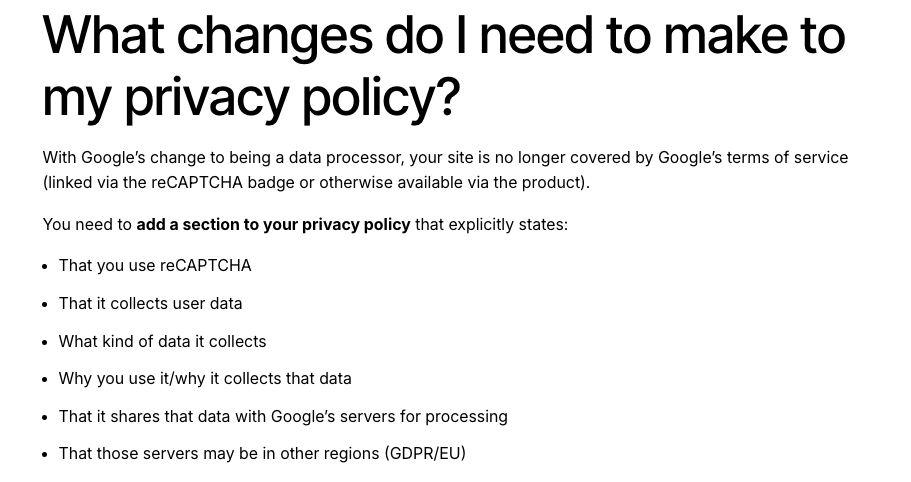
- Use bullet points for features or examples.
- Use numbered steps for instructions.
- Use tables when you’re comparing things.
- Add short definitions for key terms.
Avoid lengthy paragraphs, as they are hard for AI to process. You can also bold the main point of a section, but don’t go overboard. Here’s an example from Forge and Smith’s resource library:
Avoid These Mistakes
You will still make errors. But when you know what traps look like, it’s easier to avoid them.
- Artificial content. If you add many lists and definitions, the text becomes hard to read. AI prefers content that real people like. If your bounce rate changes suddenly, that’s a sign that the content isn’t what people – and likely AI bots – expect.
- Old content. AI models check dates. A 2021 article about AI search has zero value today. Update your content regularly, even if only to add a new example or statistic. This doesn’t mean manually editing the publication date – the original is still in the code so this isn’t a real trick. Editing your old content injects a new “modified” date into the code that search engines and AI bots can read.
- Too many synonyms. AI loves consistency. If you call your product a “platform,” then a “solution,” then a “tool,” the AI may treat them as three different things. Pick one noun per concept and use it everywhere.
- Unclear definition. AI doesn’t know your industry jargon. You should clearly define every key term. This creates a clean anchor for AI.
- No unique data. If your article only restates common knowledge, AI will not cite you. Add original research or a real case study. Give the AI something it cannot find anywhere else.
Conclusion
AI search is already happening and changing how people find content. And it’s not so difficult to make AI your friend. Before you hit publish, pause for a minute to recheck whether your first sentence answers the main question, and each paragraph has a clear idea. Recheck if you defined key terms, structured your information, and added truthful data or insights.
AI isn’t your enemy. It’s an assistant that helps users find the best answers. You only need to follow a new rule: write clean, honest content that humans actually want, and make it readable for AI.
Share post: