
You’re publishing on schedule.
Traffic isn’t tanking, but it isn’t rising either. Engagement is soft. New posts feel invisible the moment they go live.
It’s frustrating because you’re doing “the right things.” But catching it early means you can adjust before you burn through time and budget. The warning signs are usually there in your analytics.
You just have to know where to look.
1. Look at Ratios Before You Look at Totals
A site publishing eight posts a month at 40,000 sessions and a site publishing two posts a month at 40,000 sessions look identical on a dashboard, but they aren’t the same business at all.
One of them is working four times as hard for the same number. Totals will hide that for as long as you let them.
So divide. Look at traffic per post, leads per post, referring domains earned per post, and how long a new piece takes to reach whatever ranking it eventually settles at. If it used to be six weeks and it’s now five months, you have your answer before opening anything else.
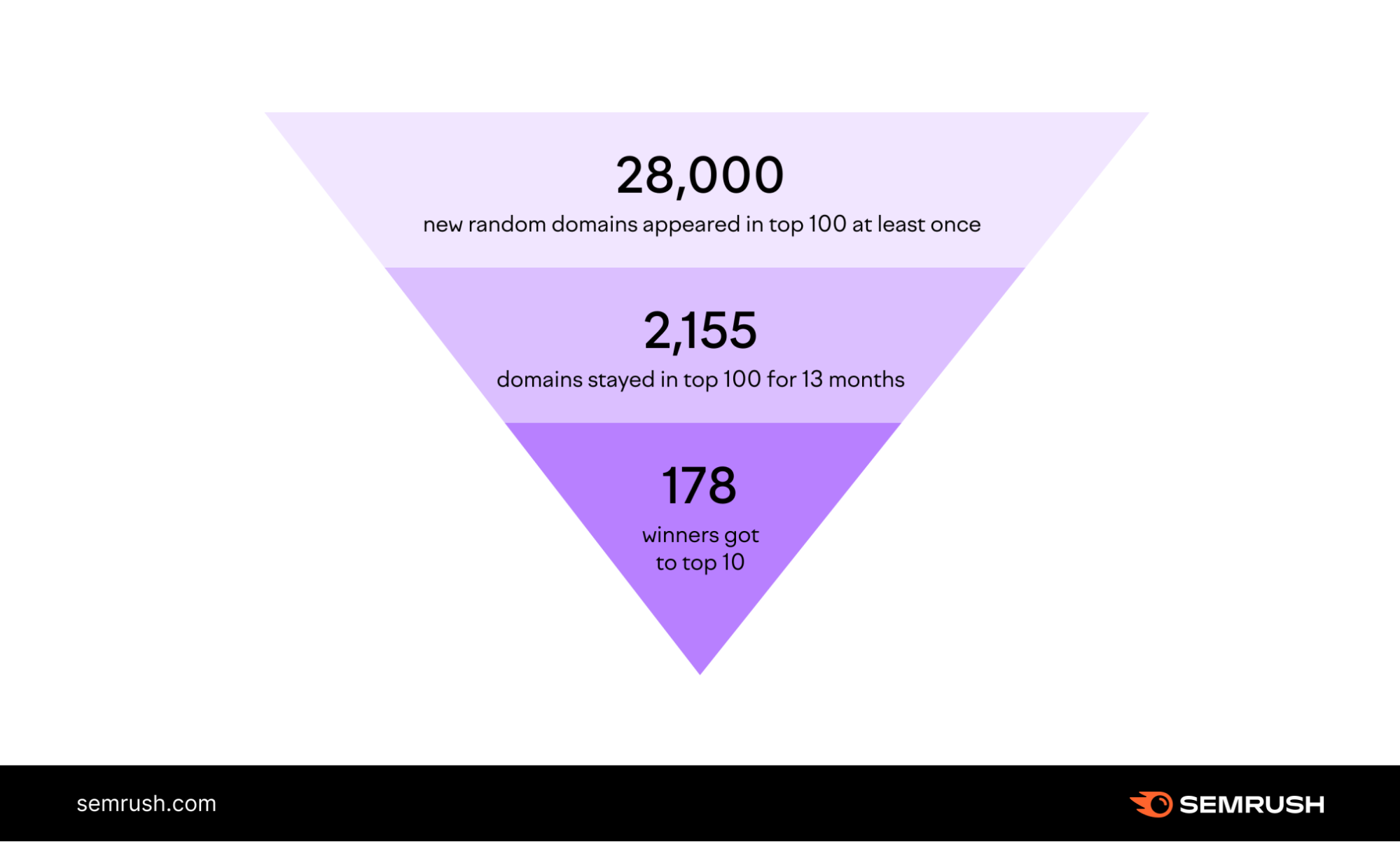
Then pull query and URL pairs from Search Console across a twelve-month window and look for pages where impressions climbed but clicks didn’t.
There are usually three explanations:
- An AI overview or a featured snippet took the click.
- The page decayed on the specific terms it used to own and started picking up broader, less qualified ones.
- Or your title is losing to the three results above you.
You can also look at GA4 to understand the returning visitor rate, engaged sessions, and assisted conversions. A blog nobody comes back to is functioning as advertising, which is fine if that’s what you budgeted for—and expensive if you thought you were building something durable.
Tip: Look at branded paid search volume too, especially if you’re also running branded search campaigns. If eighteen months of publishing hasn’t moved the number of people typing your company name into Google, that tells you what the content has been building.
2. The Audit Needs a Decision Column
Somewhere on your site, four posts are circling the same query and none of them rank. That isn’t four assets. It’s one asset split four ways, losing to itself, and publishing a fifth won’t help.
Consolidate into the strongest URL, redirect the others, and then repoint every internal link that was feeding the ones you killed. Ahrefs or Semrush will find these pileups faster than you will by hand.
When you’re assembling the audit, add a column that forces a verdict on every row: keep, merge, refresh, and kill.
Jason Ledbetter has spent 15 years scaling companies through marketing, systems, and execution, and has been part of five exits, including a $200 million telemedicine exit.
He says, “We grew a B2B SaaS client’s organic traffic 220% in six months, and we published almost nothing new to do it. It was technical fixes and pulling what already existed into proper topic clusters.
“Most companies I come into already have the pages they need. They just have them scattered and competing with each other. So before I approve any new content budget, I want the list of pages that have produced a single lead, and that list is always shorter than anyone expects.”
Consolidating what you already have is usually cheaper than commissioning more of it, and it works faster.
3. Check the Site Before You Blame the Content
You can write a genuinely good 2,400-word guide and publish it into WordPress or another platform where the blog template was clearly built last and built in a hurry.
There’s no table of contents on mobile, which turns a long piece into a scroll with no map. And the call to action at the bottom says Contact Us, identically, on every post, regardless of what brought the person there in the first place.
A design issue should not be blamed on content. Run a simple check to diagnose:
- Open your own blog on a phone, on cellular data, with a cold cache, and time it. Is it taking too long? Then you’re losing readers before they finish the first sentence.
- While you’re in there, check whether your tag archives are indexed. On a lot of WordPress installs these are thin, and they compete with the posts they link to.
Make sure you have editorial links, placed in body copy by someone who read the post, running from the pages that earn traffic toward the pages that earn money. Most sites already have the traffic sitting somewhere. They just never built a path from it to anything that converts.
In health, finance, or law, the page has to answer who wrote this and why anyone should believe them before it answers anything else. For example, a telehealth practice building its clinical library around testosterone replacement therapy with a named clinician, visible credentials, a review date, and real sourcing is doing work that publishing frequency doesn’t substitute for.
Google’s guidance on helpful, reliable, people-first content is fairly direct on this, and in those categories it isn’t advisory.
The same logic holds anywhere the reader is deciding under pressure rather than researching at leisure. Someone searching for dual diagnosis treatment at two in the morning is not comparison shopping your content library.
A treatment centre gets judged on whether that person finds a phone number, an insurance answer, and a paragraph that sounds like a human wrote it, all inside one screen. Another article on the same topic does nothing for that visitor.
4. When Publishing More Genuinely Works
Sometimes it does, under conditions specific enough that if you can’t name which one applies, you’re probably not in any of them.
Publish more when a new intent has actually opened up. A regulation changed, a platform shipped something that breaks how your customers work, or a category picked up a new name while everything ranking still uses the old one. Speed matters here in a way it doesn’t anywhere else in content.
Publish more when you have data nobody else has: a survey of 300 of your own customers, anonymized benchmarks from your client work, a teardown of forty sites in your vertical with the methodology shown. That earns links. Restating what two other agencies published last spring won’t.
You can also publish more when the questions your buyers ask are answered badly by everyone currently ranking. Read the top three results all the way through before you decide that, not the meta descriptions.
And refresh alongside anything new.
An updated post with current data, new screenshots, and a rebuilt intro usually outperforms a brand new piece on the same topic, because it keeps the URL history and whatever links it already earned. Route fresh internal links into it while you’re there—this is the version of publishing more that compounds, rather than just accumulating.
Two rules if you go this way. Distribution goes on the calendar before the draft exists. And run the swap test: if a competitor could replace your logo with theirs and publish your draft unchanged, it isn’t finished.
5. When It Won’t
Some results are closed. Local home services is the clearest case.
For example, search anything shaped like bathroom remodeling in Tampa and count what’s in the top ten: map pack, three aggregator directories, a franchise page with a city variant, and maybe one actual contractor. A regional company writing its twelfth post on remodel costs isn’t competing in that result. What moves it is proof rather than volume.
Real before-and-after photography, city pages that differ beyond a swapped place name, review count, schema markup, and a site fast enough to support someone checking it while standing on a job site with a bad signal.
6. Format Changes Cost More Than the Pitch Suggests
A podcast is a production line, not a project, and month three is where most of them quietly stop.
That said, changing format works when it solves the same problem somewhere your audience already is. Interactive tools are the strongest version of this for B2B, because they turn passive reading into a specific output the reader has some reason to act on.
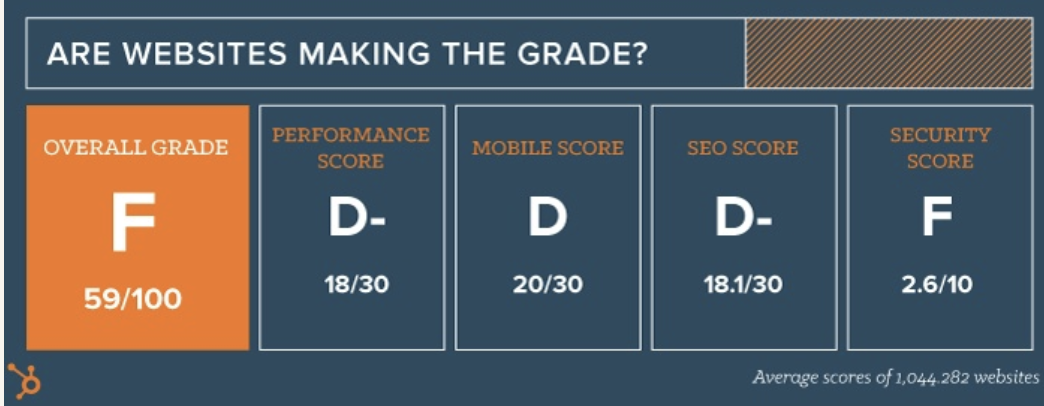
HubSpot’s Website Grader has run on exactly that logic for years. If you sell something with variable pricing or complicated fit, a calculator will often outperform your next six articles.
Wistia’s work on brand affinity covers what serialized video does that one-off explainers don’t, which mostly comes down to giving people a reason to return rather than a reason to click once.
For non-profits, though, the format that tends to move things is a recurring, well-written email with a single story in it. They’re cheaper to produce, owned outright, and unaffected by every algorithm change that flattens organizations relying on search.
7. Decide What Counts as Working Before You Launch
Every failed format pivot I’ve looked at had the same root cause. Nobody wrote down what success meant, so by month six the conversation had turned into a debate about vibes and download counts.
Gregor Emmian, Deputy Chief Digital Growth Officer at Rise, a no-commission trading platform covering crypto, stocks, and other markets, works in a category where every competitor runs the same beginner guides.
He said, “We don’t launch anything without agreeing on the number it has to move and the date we check it. If the goal is reach, then say reach and measure reach, but don’t come back later and defend the project with conversion data you never set out to collect.
“Most arguments about whether a channel works are really arguments about the fact that nobody defined working, and that gets expensive in a way the channel itself usually isn’t.”
Read leading indicators monthly and lagging ones quarterly.
Keep UTMs consistent, because six months of sloppy tagging produces a dataset that can’t answer the question you built it for.
Content Marketing Institute’s annual research keeps finding that organizations with a documented strategy report success at higher rates than those running on a shared understanding that lives in one person’s head. The document just forces the decisions to be made once, deliberately.
Where to Start
Merge the four posts fighting over one query and watch the surviving URL.
Or add service page links to your ten highest traffic posts and check assisted conversions at month-end. Or take your best performing post from two years ago and rebuild it with current data.
If the diagnosis keeps pointing back at the site rather than the content, that’s a different conversation, and it’s the one Forge and Smith has with most clients before a single new post gets written.
Write down the number you expect to move before you start.
Share post:

About the Author
Ryan Walton
Ryan is an entrepreneur with over 20 years of experience. He specializes in scaling online businesses, optimizing customer experiences, and driving growth through innovative strategies.
Contact Us More by This Author